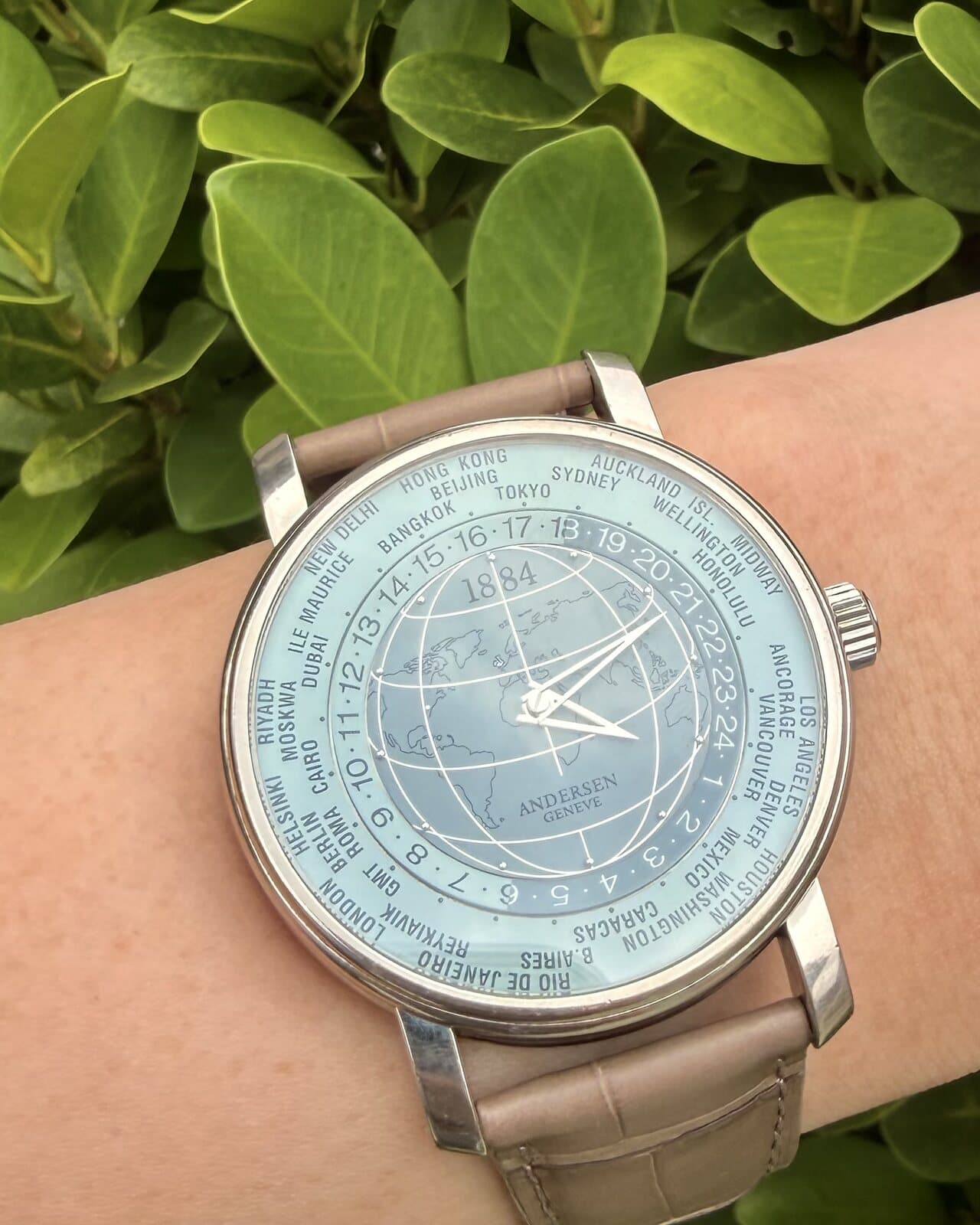
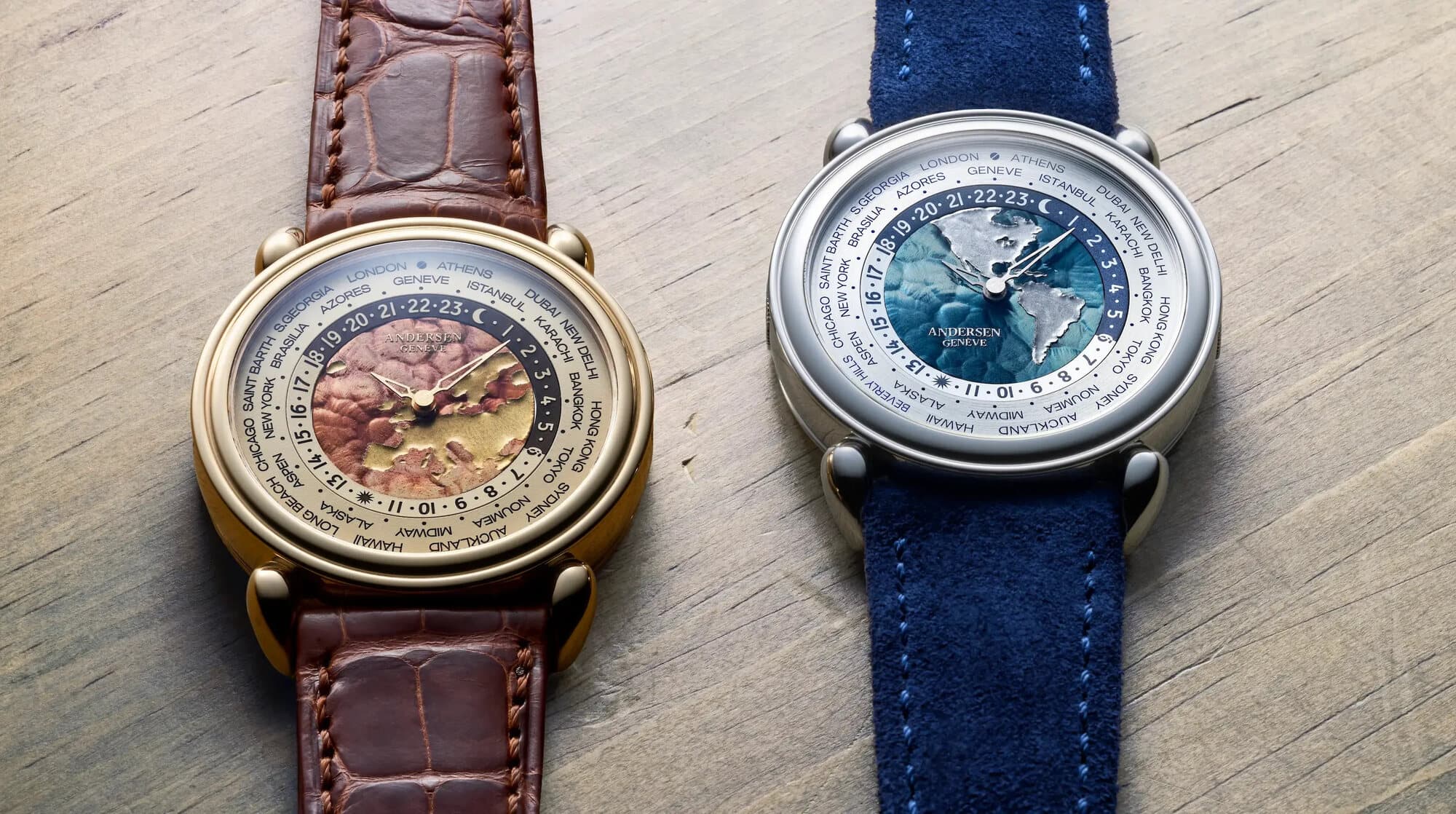
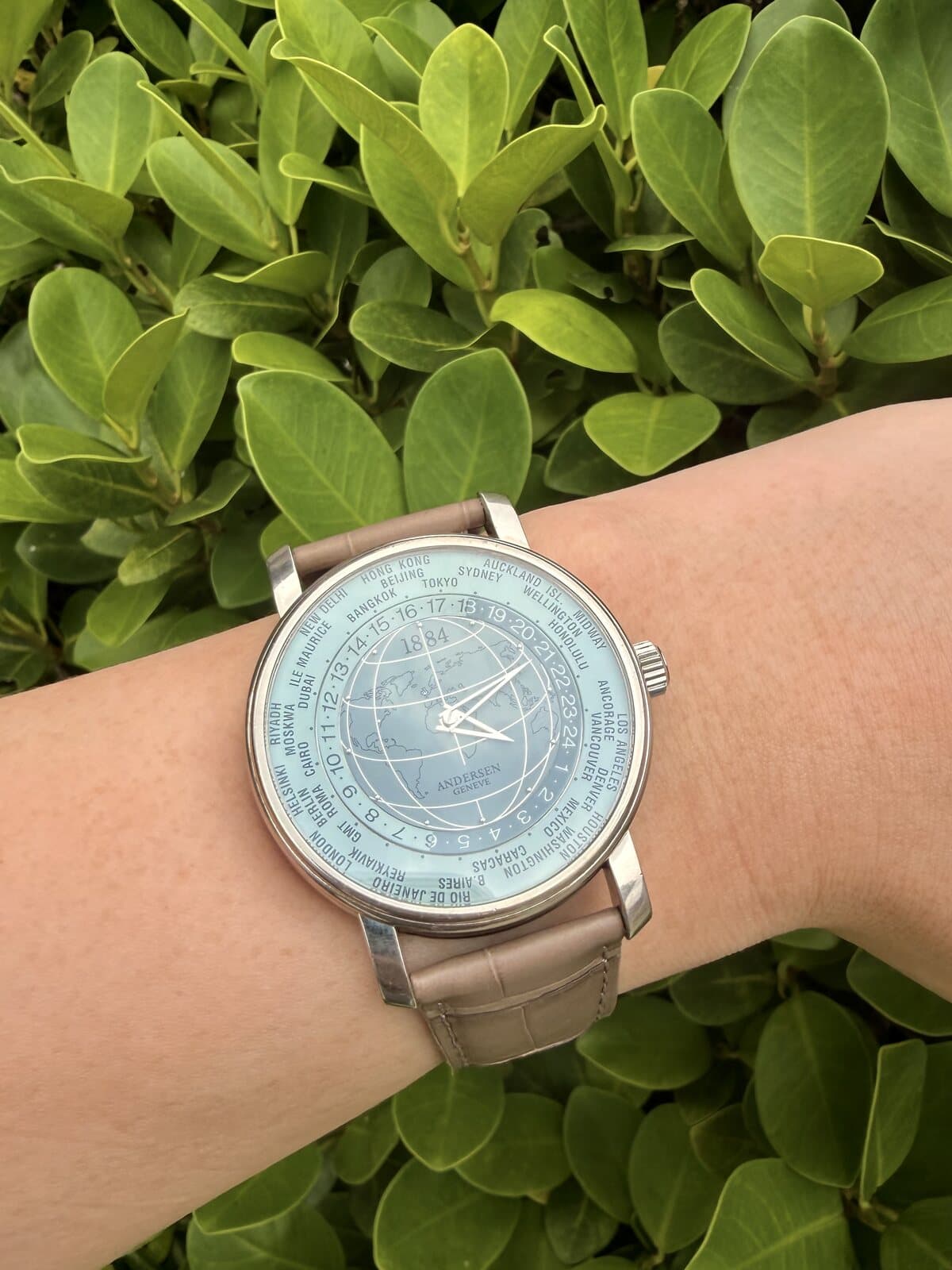
Svend Andersen was the watchmaker who kept world time alive as an independent craft after the Cottier era, first at Patek Philippe and then under his own name in Geneva. His world timers are made in small numbers and named for moments in the history of measuring the globe. The 1884 takes its name from the International Meridian Conference in Washington, which fixed Greenwich as the prime meridian.
I had read about Andersen for a long time before I saw one in the metal. The early world timers, Communication 24 and Mundus, have been rediscovered by the auction rooms. The 1884 has not, which is exactly why I was reading about it. When an example from the Svend era in white gold turned up on a trip to Tokyo in September 2026, I went to see it in person, checked it, and brought it home.
It sits beside the Patek 5130G and the Longines Hour Angle as the third answer to one question: how a watch shows where you are on the planet. The Hour Angle turns time into longitude, the 5130G shows all 24 zones at once, and the Andersen is the independent's answer to both. Three watches, one idea, three different hands.